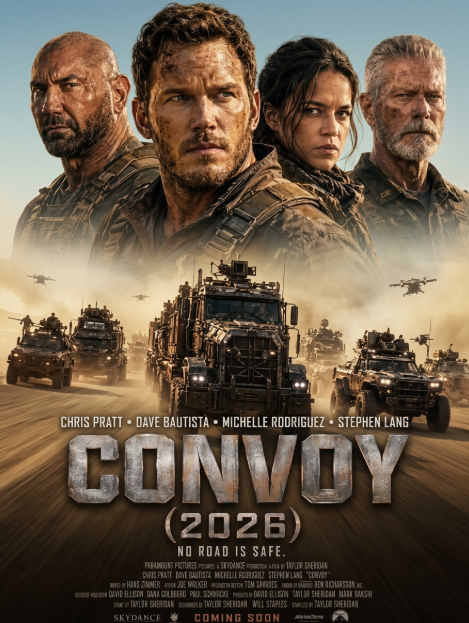

Convoy (2026) is imagined as a powerful modern reimagining of the classic trucker rebellion story, bringing the spirit of the open road back to the screen with bigger stakes, deeper emotion, and a new generation of drivers fighting for dignity in a changing America. Inspired by the legendary 1978 film Convoy, this new version would honor the rebellious energy of the original while speaking directly to the pressures facing working-class people today.
The original Convoy became a cult favorite because it was more than a road movie. It was a symbol of independence. It captured the feeling of truckers as modern cowboys, men and women who lived by the highway, answered to no one easily, and carried America’s goods across endless miles of asphalt. At its center was the idea that ordinary people could unite against corruption, abuse, and unfair authority. That idea still feels powerful today.
Convoy (2026) would begin in a world where trucking is no longer only about horsepower, radios, and long nights behind the wheel. Modern drivers face rising fuel costs, corporate control, surveillance systems, strict delivery algorithms, dangerous deadlines, and shrinking independence. The romance of the road still exists, but it is buried under pressure. Drivers are tracked, rated, pushed, fined, and replaced whenever they refuse to obey impossible demands.
At the center of the story is Ray “Rubber Duck” Harlan, a veteran trucker carrying the nickname of a road legend. He is not the same man from the original story, but he carries the spirit of that myth. Ray has spent decades on the highway. He knows every truck stop, every back road, every state line, and every kind of trouble the road can bring. He is proud, quiet, stubborn, and tired of watching drivers lose their freedom one mile at a time.
The story begins when Ray refuses to comply with a corrupt transport company’s illegal delivery scheme. The company is pushing drivers to carry dangerous cargo under false paperwork, risking lives while hiding behind political connections and private security. When Ray exposes the operation, he becomes a target. His license is threatened, his truck is seized, and law enforcement officials connected to the company try to silence him before the truth spreads.
But Ray is not alone.
A small group of truckers answers his call over the radio. At first, it is only a few rigs rolling behind him as a show of support. Then more drivers join. Independent truckers, freight haulers, farmers, veterans, single parents, mechanics, and old-school road warriors begin merging onto the highway. What starts as a protest becomes a full-scale convoy stretching for miles, a rolling symbol of resistance that captures national attention.
The title Convoy becomes more than a reference. It becomes the heart of the story. One truck can be stopped. One driver can be threatened. But when hundreds of rigs move together, they become impossible to ignore. The convoy represents unity, not chaos. These drivers are not looking for violence. They are demanding to be seen, heard, and respected.
The film’s main antagonist would be Sheriff Cole Maddox, a hard-edged lawman working under pressure from powerful interests. Maddox believes order matters more than sympathy. To him, the convoy is dangerous, disruptive, and embarrassing to the people in control. But as the story unfolds, even he begins to question whether he is enforcing the law or protecting corruption. His pursuit of Ray across state lines gives the film its classic road-chase energy while adding moral tension.

A key new character is Lena Ortiz, a young trucker trying to keep her family business alive after her father’s death. Lena represents the next generation of drivers. She is smart, fearless, and more comfortable with modern technology than Ray, but she also understands that the road is losing something important. Her partnership with Ray gives the story emotional balance: old-school experience meeting new-school resilience.
The action in Convoy (2026) would be built around massive highway sequences. Long lines of eighteen-wheelers roaring across desert roads, police blockades collapsing under pressure, drones tracking the convoy from above, truck-stop standoffs, night drives through storm weather, and narrow escapes across rural bridges would create a sense of scale and momentum. Unlike superhero action, the spectacle would feel grounded because the vehicles are real, heavy, dangerous, and driven by people with everything to lose.
The CB radio culture would also return in a modern form. Classic trucker codes, nicknames, road jokes, warnings, and radio chatter would blend with livestreams, social media clips, and independent news coverage. The convoy spreads not only by highway, but by story. People across the country begin watching, cheering, arguing, and asking what the protest really means.
The emotional power of the film comes from its working-class heart. Convoy (2026) is not about people trying to become famous. It is about people who feel forgotten. Truckers keep the country moving, but their struggles often remain invisible. The film would show the loneliness of long-haul driving, the exhaustion of endless deadlines, the pressure of debt, and the pride of doing a job that demands strength and sacrifice.
At the same time, the movie would celebrate the beauty of the open road. Sunsets over desert highways, rain on windshields, neon truck stops glowing at night, chrome reflecting morning light, and engines roaring through mountain passes would give the film a powerful sense of Americana. The road is harsh, but it is also freedom. That contradiction is what makes the story timeless.
By the final act, the convoy becomes a national movement. Ray, Lena, and the other drivers must decide whether to stop before the government cracks down or keep rolling toward the capital to expose the truth. The corrupt company tries to frame the convoy as a threat, but the drivers refuse to become what their enemies want them to be. Their strength is discipline, unity, and the simple demand for justice.
Convoy (2026) would be a thrilling fan-concept road action drama filled with roaring engines, highway rebellion, emotional stakes, and classic trucker spirit. It honors the legacy of the original while updating the story for a world where control has become more digital, power more corporate, and freedom harder to hold onto.
The road is longer now. The rules are tighter. The pressure is heavier.
But when the engines start and the radios light up, the message is clear: one truck may be alone, but a convoy can shake the world.
